
How to Tackle Vitamin B12 Deficiency — 4 Leafy Greens That Might Help
If your body lacks vitamin B12 and you often feel weak or tired, adding certain leafy greens to your diet may help. (But if the deficiency is serious — always check with a doctor or dietitian before making big changes.)
🌿 Leaves worth including
Here are four leafy greens often suggested for improving overall nutrition — some say they may also support B12 levels or help your body use B12 better.
Moringa leaves (Sahjan)
- Moringa leaves (Sahjan)
- These leaves are a nutrient powerhouse — full of vitamins (like A), calcium, iron, fiber.
- Eating them may help fight weakness, improve digestion, and boost immunity.
- Spinach (Palak)
- Spinach is commonly known for iron — but some write it off as helpful when dealing with B12 deficiency too.
- It also has folate and other nutrients that help overall health and energy levels.
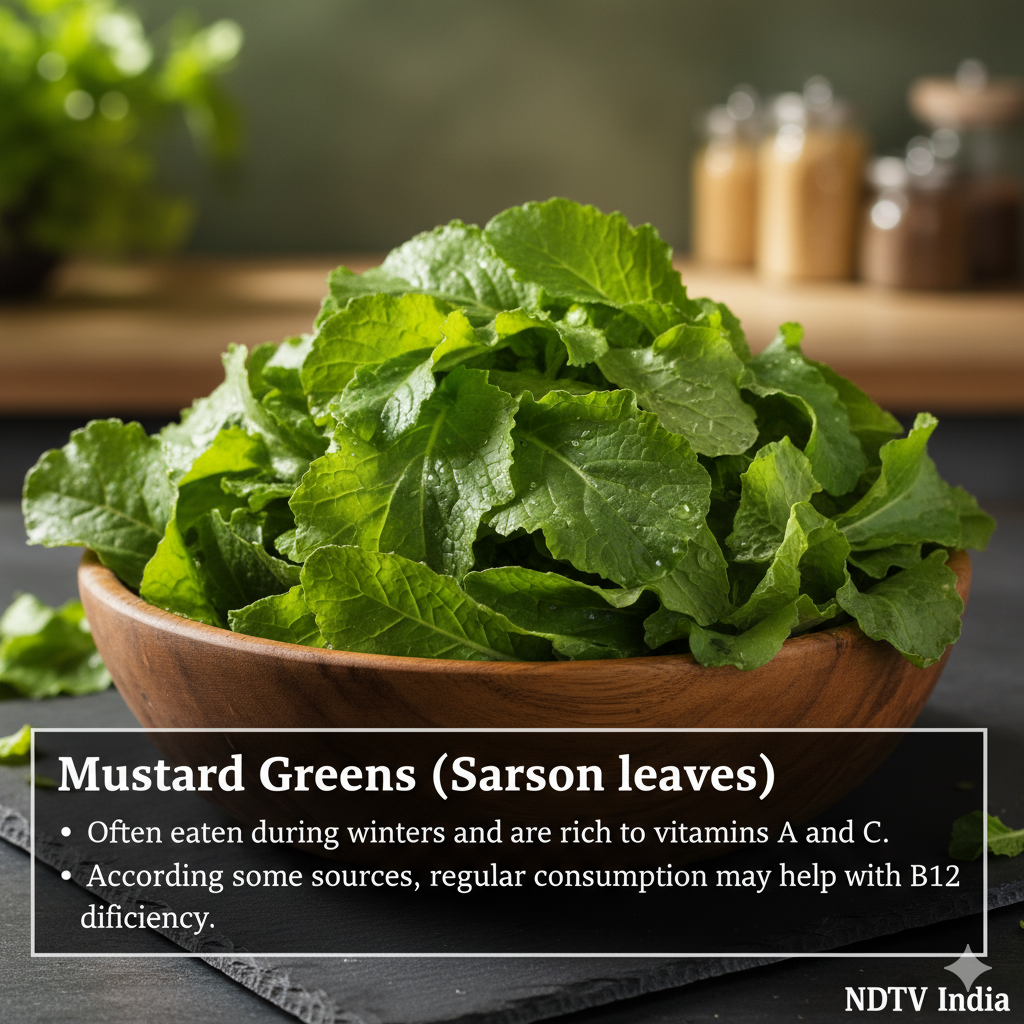
- Mustard Greens (Sarson leaves)
- Mustard greens are often eaten during winters and are rich in vitamins A and C.
- According to some sources, regular consumption may help with B12 deficiency.
- Curry Leaves (Kadi patta)
- Curry leaves — often used in Indian cooking for flavor — are sometimes cited as a diet-friendly source of nutrients, including B12.
- They’re also believed to benefit skin and hair health.
⚠️ Important: Does Eating Greens Actually Fix B12 Deficiency?
- Many nutrition guides say that true B12 is mostly found in animal-based foods (like meat, eggs, dairy), not in leafy greens.
- Some experts suggest that while greens like moringa or spinach are very nutritious in other ways (iron, folate, vitamins, fiber…), they may not reliably supply B12.
- In other words: these leaves might help improve overall nutrition and support health — but relying on them alone for B12 may not be enough.
✅ What you can do if you’re vegetarian and want to avoid B12 deficiency
Because B12 is more reliably found in animal-derived foods, vegetarians (or those who limit animal products) should consider:
- Including dairy (milk, curd, paneer), eggs if acceptable to you. These are traditional sources of B12 in many diets.
- Using fortified foods — like cereals, plant milks, or foods labeled “fortified with B12.” These are enriched with B12 and can help if you don’t eat non-veg.
- If recommended by a doctor: considering B12 supplements — especially when diet alone might not meet needs (though always under medical advice).